
Safety, measuring & mixing
Why Does Epoxy Resin Get Hot After Mixing?
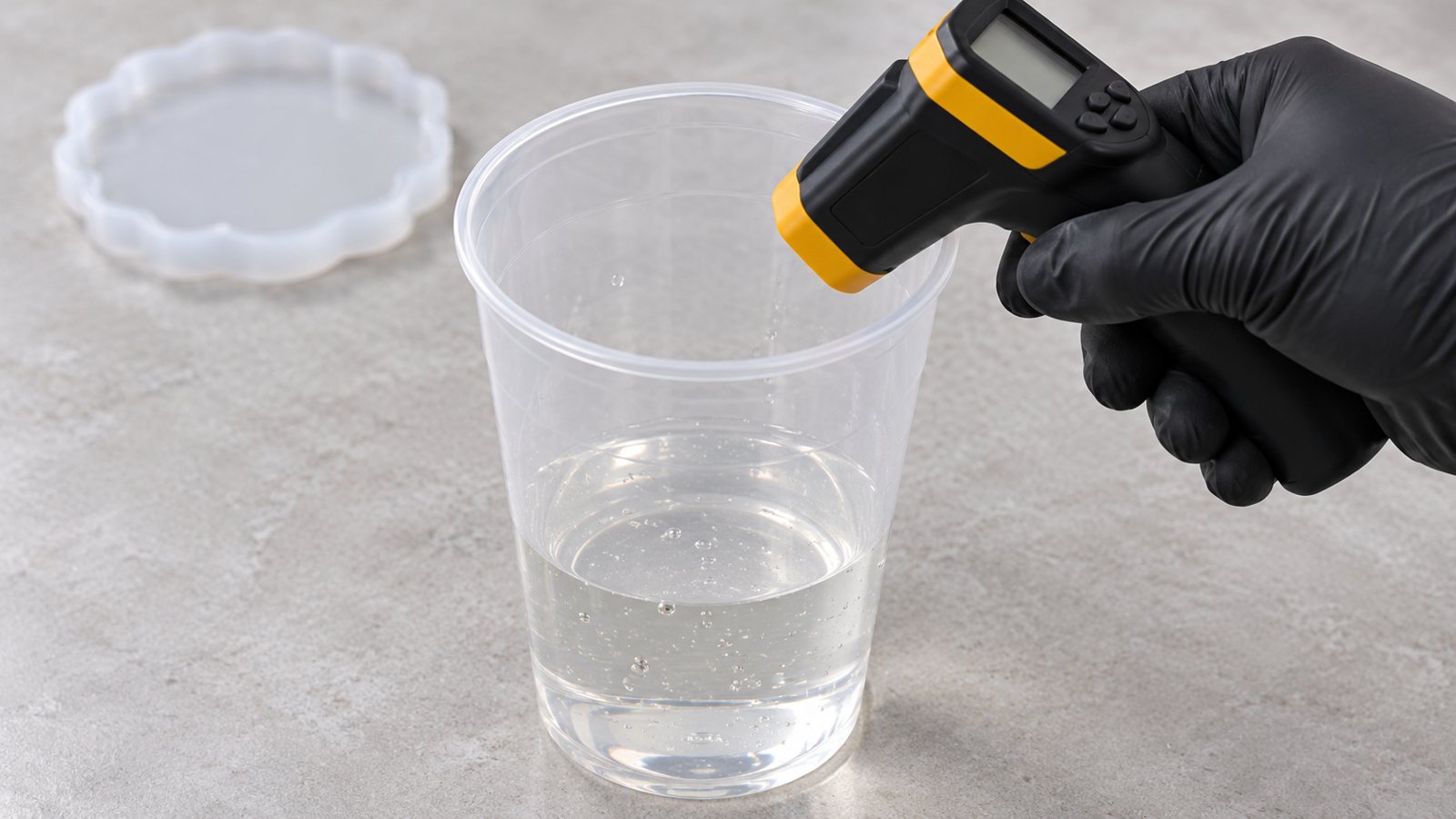
When epoxy resin and hardener are combined, a chemical reaction begins that gradually transforms the liquid mixture into a solid material. This curing process is exothermic, meaning it releases heat.
Although the reaction starts during mixing, the temperature may become noticeably higher afterward, especially if the mixture remains in its container.
A moderate increase in temperature is normal. However, excessive heat can accelerate curing, shorten the working time, and affect the quality of the finished piece.
What Causes Epoxy Resin to Heat Up?
Several factors influence how quickly heat develops and accumulates after mixing:
-
Batch Size: Larger quantities of mixed resin generate more total heat. When concentrated in one container, this heat can accumulate rapidly.
-
Container Shape: Deep, narrow containers tend to retain heat more readily than shallow, wide containers.
-
Ambient Temperature: Warmer working conditions accelerate the curing reaction, causing the mixture to heat up sooner.
-
Prewarming Resin and Hardener: Warming resin bottles in a controlled warm-water bath can reduce viscosity and make mixing easier. However, starting with warmer components also accelerates the curing reaction, potentially causing the mixture to become hot sooner and reducing its working time. Always follow the manufacturer’s recommended temperature range.
-
Resin Formulation: Fast-curing resins generally develop heat more rapidly than slower-curing formulations.
-
Time in the Mixing Container: Leaving mixed resin in a concentrated mass allows heat to accumulate, which further accelerates the curing reaction.
-
Incorrect Resin-to-Hardener Ratio: Adding more hardener than the manufacturer specifies can disrupt the curing reaction and may cause abnormal heat buildup, depending on the resin formulation. Extra hardener does not reliably make epoxy cure faster and can result in improper curing, leaving the finished piece soft, sticky, or structurally weak. Always follow the manufacturer’s specified mixing ratio.
What Happens When Epoxy Resin Overheats?
Excessive heat can cause the curing reaction to accelerate rapidly. In severe cases, this can develop into thermal runaway, where increasing temperature causes the reaction to speed up and generate even more heat.
Depending on the resin formulation and the severity of overheating, possible consequences include:
-
Reduced working time and premature hardening.
-
Excessive bubbling or foaming
-
Yellowing or discolouration
-
Cracking, shrinkage, or distortion
-
Damage to mixing containers or surrounding materials
Severe overheating can also produce irritating fumes or smoke and create burn or fire hazards.
What About Flash Cure?
In extreme cases, excessive heat buildup can lead to flash cure, where epoxy resin hardens much faster than expected, sometimes within minutes. This rapid reaction can cause bubbling, foaming, discolouration, or even smoke. Flash cure is different from the normal heat generated during curing and may create serious safety risks. Learn more in our upcoming article, **“**What Is Flash Cure in Epoxy Resin, and How Can You Prevent It?”
How to Prevent Epoxy Resin from Overheating
1. Prepare Everything Before Mixing
Have your moulds, pigments, tools, and workspace ready before combining resin and hardener. This prevents unnecessary delays after mixing.
2. Mix Appropriate Quantities
Avoid preparing excessively large batches. Follow the manufacturer’s maximum recommended mixing quantity, particularly when working with fast-curing formulations.
3. Avoid Leaving Mixed Resin in the Container
Once mixing is complete, transfer the mixture to your prepared mould or surface without unnecessary delay, following the manufacturer’s instructions. Spreading resin into a thin layer allows heat to dissipate more effectively. However, deep moulds can also retain heat, so always observe the recommended maximum pour depth.
4. Control the Working Temperature
Work within the manufacturer’s recommended temperature range. If you warm resin bottles before mixing, remember that warmer components can significantly shorten the available working time.
5. Select the Appropriate Resin
Use coating resin for applications within its specified coating thickness and casting resin for projects requiring thicker pours. Deep-casting formulations are designed to manage heat buildup more effectively during larger or deeper pours.
What Should You Do If Your Resin Becomes Too Hot?
If the mixture becomes unusually hot, thickens rapidly, begins foaming, or produces smoke, stop using it immediately.
Do not touch the hot resin, attempt to pour it into your artwork, or add water or solvents to cool it. Keep people away from the affected area and follow the manufacturer’s safety data sheet (SDS) and emergency instructions. Avoid moving an overheating container if doing so could cause burns or spills.
Final Thoughts
Heat generation is a natural part of epoxy curing, but excessive heat can compromise both safety and the result. Preparing your workspace, controlling batch size and temperature, and avoiding unnecessary delays after mixing are essential steps in managing heat buildup.
Always follow the manufacturer’s recommendations for mixing quantities, working temperatures, and maximum pour depths.