
Safety, measuring & mixing
Is Epoxy Resin Safe to Use?
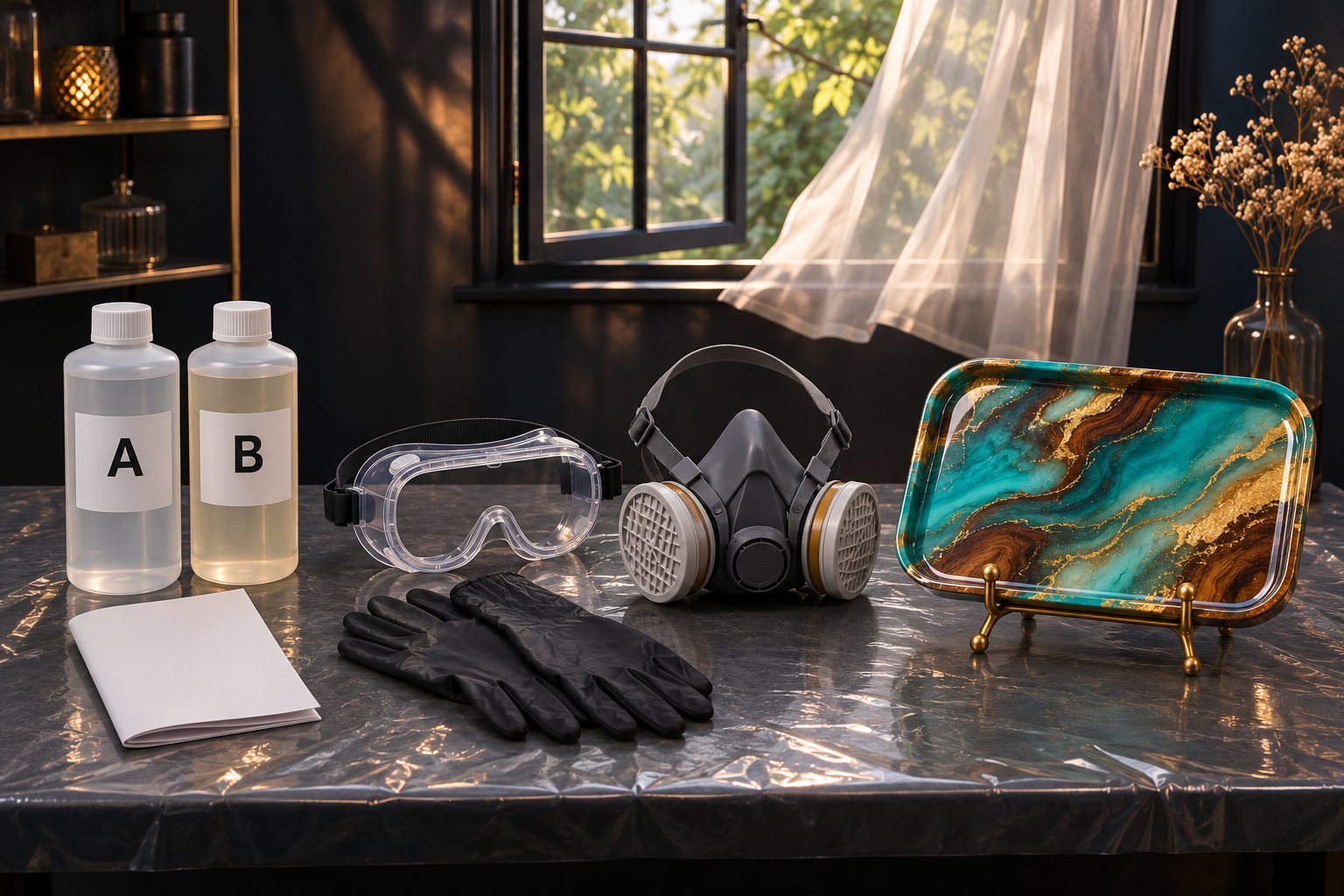
Epoxy resin is a versatile material for creating beautiful artwork, but working with it requires care. Understanding your materials and developing good safety habits will help you reduce exposure and work with greater confidence.
The main precautions apply while the resin and hardener are uncured—during measuring, mixing, pouring, and curing. Contact with these materials can cause skin and eye irritation. Some people may also develop an allergy, known as sensitization, which can make them react to even tiny amounts of exposure later. Protecting your skin from your very first project is therefore important. A product does not need a strong smell to require precautions. Labels such as “low odour,” “solvent-free,” “zero VOC,” or “BPA-free” do not mean a resin is harmless or can be used without protection. Always follow the safety instructions for your particular resin.
What Should I Check Before Buying Resin?
Choose a supplier that provides clear labels, detailed instructions, Safety Data Sheets (SDS) for both the resin and hardener, and a Technical Data Sheet (TDS). The SDS explains the hazards, handling precautions, ventilation requirements, protective equipment, and first-aid measures. The TDS provides mixing ratios, working time, curing conditions, and recommended limits for batch size and pour depth.
Check the recommended maximum batch size and pour depth, too. Epoxy releases heat as it cures, and mixing too much at once or pouring deeper than recommended can cause excessive heat.
Price alone does not determine safety. An expensive resin still requires careful handling, while a lower-priced product should be assessed using its documentation rather than assumptions about its quality.
Simple Safety Habits for Every Project
Protect your skin and eyes
Wear chemical-resistant gloves suitable for your product, clothing that covers your arms, and splash goggles. Nitrile gloves are commonly used for resin work but check the SDS and glove manufacturer’s guidance. Change gloves promptly if they become contaminated, torn, or damaged.
Prepare a properly ventilated workspace
Work in a dedicated area with effective air exchange and maintain ventilation while the resin cures. Simply opening a window may not provide enough ventilation for every product or workspace. Low odour does not mean ventilation is unnecessary.
Check whether you need a respirator
Follow the SDS and the requirements of your working conditions. If respiratory protection is needed, use a properly fitted respirator with filters suitable for the hazard. An ordinary face mask does not protect against chemical vapours.
Keep your working area organized
Protect your table, prepare your tools before mixing, and keep food and drinks away. Keep children and pets away from both the working area and curing pieces.
Respect the product’s mixing and pouring limits
Follow the specified ratio, maximum batch size, and pour depth. Avoid leaving a large quantity of mixed resin sitting in a cup, where heat can build up quickly.
Clean up carefully
Follow the manufacturer’s instructions for spills and tools. Do not use alcohol, acetone, or other solvents to remove resin from your skin. Follow the SDS first-aid instructions and wash promptly with soap and water. Remove contaminated clothing to prevent further contact.
Dispose of leftovers responsibly
Never pour resin, hardener, or contaminated cleaning liquids into a sink or drain. Follow the product’s disposal instructions and local waste requirements.
Control dust when sanding
Wait until the resin has fully cured according to the manufacturer’s instructions. Use suitable dust extraction and appropriate eye and respiratory protection when sanding or drilling.
What About Resin After It Has Cured?
Fully cured epoxy is generally safer to manage than its uncured components. However, a surface that feels hard may not yet have reached its full cure, so check the manufacturer’s curing schedule. For projects involving food contact or heat, confirm that the specific product is suitable for that use and follow any stated limitations. Good safety habits belong alongside measuring, mixing, and pouring. Prepare your workspace and protection before opening the bottles, so you can give your creative work your full attention.